
Welcome to 2026. It’s a year where talking to your refrigerator is not only normal, but your car probably knows your morning mood better than you do, and your child’s favourite “friend” might just be a piece of sophisticated software. While officially, we have now entered the age of the AI Risks integrated household, the novelty has worn off and been replaced by this pressing need for a manual.
Thus, the focus of the global conversation has shifted as we celebrate Safer Internet Day 2026. We don’t worry just about “screen time” anymore; we consider how to manage “AI time.” The theme outlined in this regard is “Smart tech, safe choices – Exploring the safe and responsible use of AI,” which seems to put the onus now not on avoiding technology but on mastering the safe use of AI for children.
This guide will walk you through this new landscape, from the charm of educational AI chatbots for kids to the unsettling reality of deepfakes, to ensure that your home remains a sanctuary in an ever-synthetic world.
Understanding AI Risks for Children
Overview of AI Technology in 2026
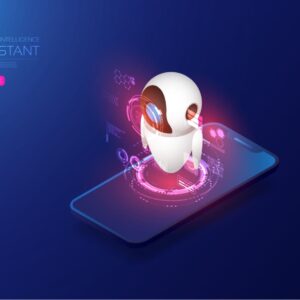
By 2026, Artificial Intelligence will not just be a search engine with a chat window. It’s “Generative AI” that creates art, music, and voice in real time. It powers the personalised tutors in our schools and the virtual companions in our kids’ pockets. It learns from us, imitates us, and sometimes tries to predict us.
Specific AI Risks
While the benefits are great, the risks are uniquely tailored to the child’s stage of development.
Abuse of AI Applications: Children are inherently curious. They might try to use AI to “cheat” on homework, stunting their own cognitive growth, or jailbreak bots out of curiosity to see what they are not supposed to say.
Exposure to Inappropriate Content: Even with filters on, generative AI tends to “hallucinate” and create biased, violent, or sexually explicit content should a child’s query hit a loophole within an algorithm.
Privacy Concerns: AI thrives on data. Every secret whispered to a “digital friend” is data that could be stored, analysed, or—if the platform isn’t secure—leaked.
Safe Use of AI for Children
The goal isn’t to ban AI; that’s like trying to ban the wind. The goal is to build a better windmill.
Guidelines for Parents and Guardians
- Setting Age-Appropriate Usage Limits: Not all AI is built the same. A 7-year-old child using a curated “creative story” AI is different from a 15-year-old using an open-ended LLM (Large Language Model). Consider AI access to be more akin to a “digital ladder”—the higher the rung, the more mature the user.
- Monitoring Online Interactions: It’s no longer enough to look at the browser history. You need to understand the nature of the conversation. Is your child treating the AI as a tool or as a primary emotional outlet?
Educating Children About AI
- Implication: Understand that AI doesn’t “know” things as a person. It predicts the next likely word or pixel. It has no soul, no morals, and no actual understanding of truth.
- Teaching Critical Thinking: Reinforce the “Three Sources” rule. If an AI tells you a fact, find two other reputable, human-verified sources to back it up before believing it.
AI Chatbots for Kids
Among the greatest changes in recent years, one might include changes coming about with the rise of AI chatbots designed for kids. They are meant to be friendly, infinitely patient, and incredibly helpful.
The Benefits
Educational Support: Just think of a tutor who never grows tired of explaining fractions in multiple ways. AI can adapt instantaneously to a child’s specific learning style.
Social Skills Development: The “practice” conversations provided by a safe AI can help neurodivergent children or those struggling with social anxiety build confidence toward real-life interactions.
The risks
Incorrect Information: Since bots are programmed to be polite, often this means they will confidently tell a lie when they are unsure rather than say they do not know.
Risk of Harmful Interactions: Recent reports have discussed how extended use of “companion bots” is known to lead to “parasocial relationships,” where children prefer the company of the AI rather than real-world friends.
Generative AI Safety
Generative AI is the “creative” side of the technology-it’s what makes the pictures, the videos, and the essays.
What is Generative AI?
To be succinct, it’s AI that creates, rather than analyses. It takes a prompt (“Draw a cat on Mars”) and uses its vast database to generate a brand-new image.
Potential Threats to Minors
The biggest threat here is the loss of reality. When a child can create anything they can imagine, the understanding of what is real and what is synthetic becomes blurred. “Undress” apps and other cyberbullying tools leverage generative AI to target minors.
Safety Measures
- Age Restrictions: Most major AI platforms in 2026 require parental consent for users under 18 and have strict 13+ rules. Abide by them.
- Safe Sharing Practices: Remind youth that once they upload a photo into an AI “avatar generator,” they no longer control that image.
Deepfake Protection for Minors
Deepfakes, highly realistic AI-generated videos or audio, are representative of the digital safety frontier.
What are Deepfakes?
They employ “Generative Adversarial Networks” to substitute faces or voices in videos. By the year 2026, these have become so realistic that few can detect them, even experts.
Risks in Children’s Content
From fake “celebrity” messages instructing kids to perform dangerous stunts to the horrifying rise of non-consensual AI-generated images of peers known as AI-CSAM, deepfakes are a primary concern for the modern parent.
Protection Strategies
Recognition: Teach your kids to look for “glitches.” Does the person’s jewellery look weird? Do their eyes move naturally? If a video seems too shocking to be true, it probably is.
Tools and Technology: Utilise browser extensions, along with parental controls, which have a “Synthetic Media Detection.” Most 2026 smartphones have introduced built-in watermarking to identify AI-generated content.

Safer Internet Day 2026
This year’s Safer Internet Day 2026 theme, “Smart tech, safe choices,” is more than a slogan; it’s a call to action.
Importance of the Day
This is a global “reset button.” It’s a day for families to sit down and discuss their digital “house rules.”
Activities and Resources
- COMMUNITY EVENTS: Check your local library and/or school for workshops on “AI Literacy”
- Engaging with Schools: Ensure your child’s school has an “AI Ethics” policy. Schools in 2026 should be teaching kids how to use AI as a tool, not a crutch.
Conclusion
As we progress through the rapidly changing technological landscape, ensuring that AI is used safely for children is becoming increasingly important. By understanding the potential risks surrounding AI chatbots for kids and the implications of generative AI, parents and guardians are ready to make informed decisions to put safety first for their children. Expressing concern for deepfake protection of minors and engaging in events like Safer Internet Day 2026 will pave the way for even better collaboration in our common quest to create a safe digital space for young people. Together, we enable our children to explore technology while protecting them from its intrinsic pitfalls, making smart and safe choices a guideline in their actions online.
Exciting as the world of 2026 may be, it calls for a different kind of vigilance. Focusing on the safe use of AI for children is not just a protection from risks; it equips them with the right kind of digital literacy that places them at the forefront.
We need to address the safety of generative AI and deepfakes for minors, not by living in fear, but through education and open lines of communication. The “smart choice” isn’t to unplug; it’s to stay connected, stay curious, and stay informed.
FAQ Section:
1. At what age can I let my child use AI chatbots?
Ans. Most experts recommend open-ended AI when kids are at least 13 years old, and for younger children, use only “walled garden” AI apps that are specifically made for education and approved by organisations based on child safety.
2. How can I tell if a video is a deepfake?
Ans. Look for “digital artefacts” like blurring around the mouth when the person speaks, lack of natural blinking, or shadows that don’t match the light source. If a video asks for money or personal info, treat it as a fake immediately.
3. Is my child’s data safe when they use AI?
Ans. Check the privacy policy of the specific application. Look for applications that offer “End-to-End Encryption” and those that explicitly say they do not use minor data to train their models.
Q 4. How will you explain the concept of AI to a 10-year-old?
Ans. AI is like a brilliant, swift parrot. It can mimic what it has seen and heard, but doesn’t actually understand what it is saying or feel any emotion.









 Total views : 37159